ON SALE
ON SALE
Yasir
✓
and — people purchased

₨ 15,000
₨ 24,500

Days
Hours
Min
Sec
₨ 170,000 Original price was: ₨ 170,000.₨ 162,000Current price is: ₨ 162,000.
Brand: TP-Link
Series: TL-JetStream
Model: TL-SG3452P
Color: Black
Recommended For: Businesses
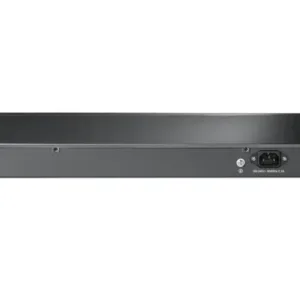
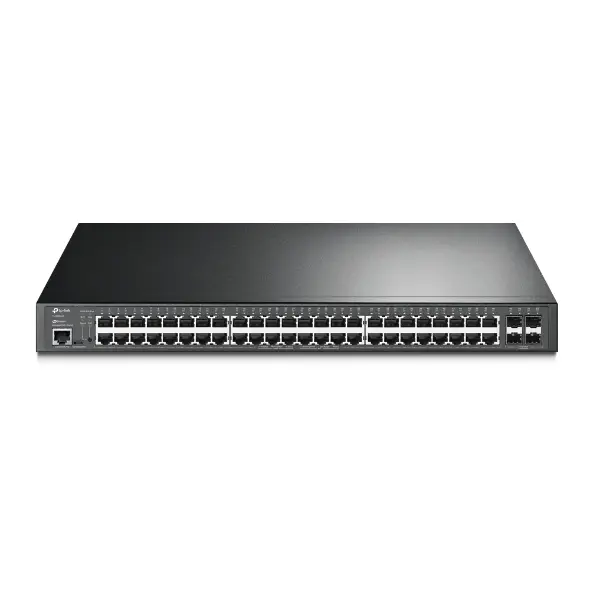
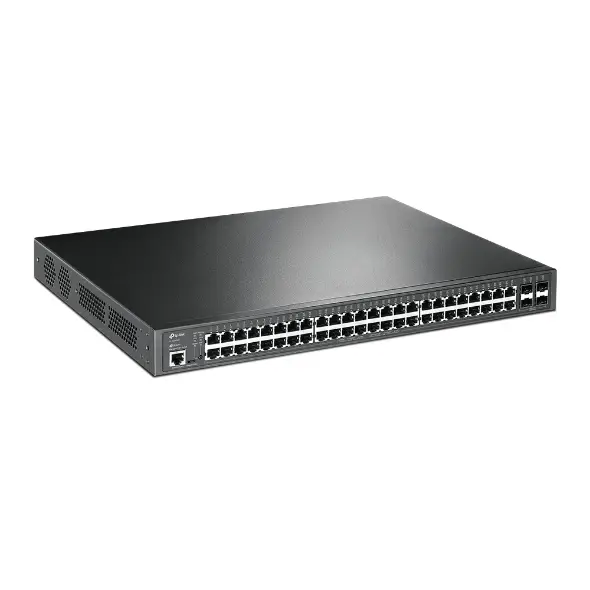
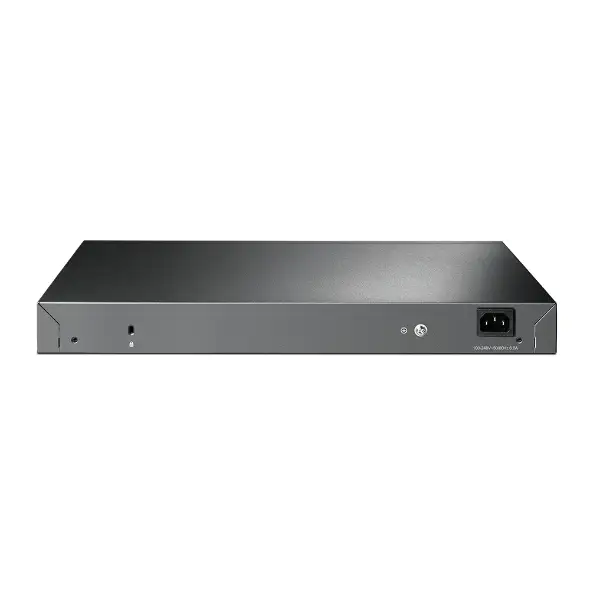
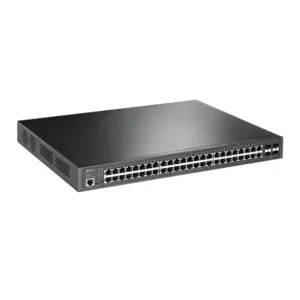
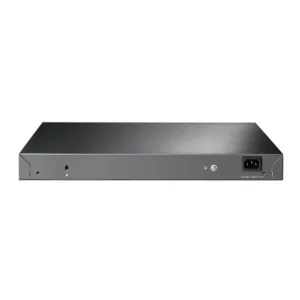
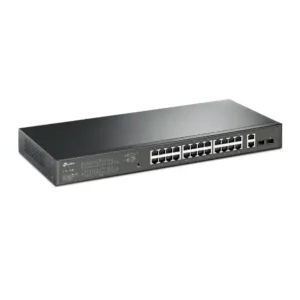
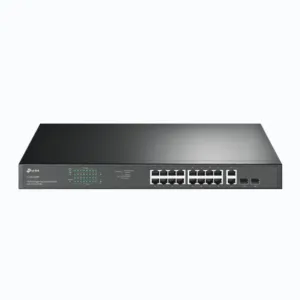
TL-SG3452P is a Jetstream 52-port Gigabit managed switch of TP-Link. It offers 48 PoE+ ports and centralized cloud management. Its advanced L2+ features, and security make TL-SG3452P a good managed switch for TP-Link Pakistan
Share to your buddy !
| HARDWARE FEATURES | |
| Interface | • 48× 10/100/1000 Mbps RJ45 Ports |
| • 4× Gigabit SFP Slots | |
| • 1× RJ45 Console Port | |
| • 1× Micro-USB Console Port | |
| Fan Quantity | 3 |
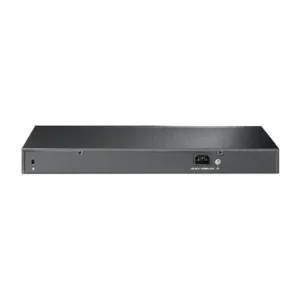
| Power Supply | 100-240 V AC~50/60 Hz |
| PoE+ Ports(RJ45) | • Standard: 802.3at/af compliant |
| • PoE+ Ports: 48 Ports, up to 30 W per port | |
| • Power Budget: 384 W | |
| PoE Ports (RJ45) | • Standard: 802.3at/af compliant |
| • PoE+ Ports: 48 Ports, up to 30 W per port | |
| • PoE Power Budget: 384 W* | |
| Dimensions | 17.3 × 13.0 × 1.7 in. (440 × 330 × 44 mm) |
| Mounting | Rack Mountable |
| Max Power Consumption | 52.5 W (no PD connected) |
| 485.4 W (110 V/60 Hz) (with 384 W PD connected) | |
| Max Heat Dissipation | 179.1 BTU/hr (110 V/60 Hz) (no PD connected) |
| 1656.2 BTU/hr (110 V/60 Hz) (with 384 W PD connected) | |
| PERFORMANCE | |
| Switching Capacity | 104 Gbps |
| Packet Forwarding Rate | 77.4 Mpps |
| MAC Address Table | 16 K |
| Packet Buffer Memory | 12 Mbit |
| Jumbo Frame | 9 KB |
| SOFTWARE FEATURES | |
| Quality of Service | • 8 priority queues |
| • 802.1p CoS/DSCP priority | |
| • Queue scheduling | |
| – SP (Strict Priority) | |
| – WRR (Weighted Round Robin) | |
| – SP+WRR | |
| • Bandwidth Control | |
| – Port/Flow-based Rating Limiting | |
| • Smoother Performance | |
| • Action for Flows | |
| – Mirror (to supported interface) | |
| – Redirect (to supported interface) | |
| – Rate Limit | |
| – QoS Remark | |
| L3 Features | • 16 IPv4/IPv6 Interfaces |
| • Static Routing | |
| – 48 static routes | |
| • Static ARP | |
| • 316 ARP Entries | |
| • Proxy ARP | |
| • Gratuitous ARP | |
| • DHCP Server | |
| • DHCP Relay | |
| • DHCP L2 Relay | |
| L2 and L2+ Features | |
| Link Aggregation | • Static link aggregation |
| • 802.3ad LACP | |
| • Up to 8 aggregation groups and up to 8 ports per group | |
| Spanning Tree Protocol | • 802.1d STP |
| • 802.1w RSTP | |
| • 802.1s MSTP | |
| • STP Security: TC Protect, BPDU Filter, BPDU Protect, Root Protect, Loop Protect | |
| Loopback Detection | • Port-based |
| • VLAN based | |
| Flow Control | • 802.3x Flow Control |
| • HOL Blocking Prevention | |
| Mirroring | • Port Mirroring |
| • CPU Mirroring | |
| • One-to-One | |
| • Many-to-One | |
| • Tx/Rx/Both | |
| L2 Multicast | • Supports 511 (IPv4, IPv6) IGMP groups |
| • IGMP Snooping | |
| – IGMP v1/v2/v3 Snooping | |
| – Fast Leave | |
| – IGMP Snooping Querier | |
| – IGMP Authentication | |
| • MVR | |
| • MLD Snooping | |
| – MLD v1/v2 Snooping | |
| – Fast Leave | |
| – MLD Snooping Querier | |
| – Static Group Config | |
| – Limited IP Multicast | |
| • Multicast Filtering: 256 profiles and 16 entries per profile | |
| Advanced Features | • Support Omada Hardware Controller (OC200/OC300), Software Controller, Cloud-Based Controller |
| • Automatic Device Discovery | |
| • Batch Configuration | |
| • Batch Firmware Upgrading | |
| • Intelligent Network Monitoring | |
| • Abnormal Event Warnings | |
| • Unified Configuration | |
| • Reboot Schedule | |
| • ZTP (Zero-Touch Provisioning) | |
| VLAN | • VLAN Group |
| – Max 4K VLAN Groups | |
| • 802.1q Tagged VLAN | |
| • MAC VLAN: 12 Entries | |
| • Protocol VLAN: Protocol Template 16, Protocol VLAN 16 | |
| • GVRP | |
| • VLAN VPN (QinQ) | |
| – Port-Based QinQ | |
| – Selective QinQ | |
| • Voice VLAN | |
| Access Control List | • Time-based ACL |
| • MAC ACL | |
| – Source MAC | |
| – Destination MAC | |
| – VLAN ID | |
| – User Priority | |
| – Ether Type | |
| • IP ACL | |
| – Source IP | |
| – Destination IP | |
| – Fragment | |
| – IP Protocol | |
| – TCP Flag | |
| – TCP/UDP Port | |
| – DSCP/IP TO | |
| – User Priority | |
| • Combined ACL | |
| • Packet Content ACL | |
| • IPv6 ACL | |
| • Policy | |
| – Mirroring | |
| – Redirect | |
| – Rate Limit | |
| – QoS Remark | |
| • ACL applies to Port/VLAN | |
| Security | • IP-MAC-Port Binding |
| – DHCP Snooping | |
| – ARP Inspection | |
| – IPv4 Source Guard | |
| • IPv6-MAC-Port Binding | |
| – DHCPv6 Snooping | |
| – ND Detection | |
| – IPv6 Source Guard | |
| • DoS Defend | |
| • Static/Dynamic Port Security | |
| – Up to 64 MAC addresses per port | |
| • Broadcast/Multicast/Unicast Storm Control | |
| – kbps/ratio/pps control mode | |
| • IP/Port/MAC-based access control | |
| • 802.1X | |
| – Port-based authentication | |
| – Mac-based authentication | |
| – VLAN Assignment | |
| – MAB | |
| – Guest VLAN | |
| – Support Radius authentication and accountability | |
| • AAA (including TACACS+) | |
| • Port Isolation | |
| • Secure web management through HTTPS with SSLv3/TLS 1.2 | |
| • Secure Command Line Interface (CLI) management with SSHv1/SSHv2 | |
| IPv6 | • Dual IPv4/IPv6 |
| • Multicast Listener Discovery (MLD) Snooping | |
| • IPv6 ACL | |
| • IPv6 Interface | |
| • Static IPv6 Routing | |
| • IPv6 neighbor discovery (ND) | |
| • Path maximum transmission unit (MTU) discovery | |
| • Internet Control Message Protocol (ICMP) version 6 | |
| • TCPv6/UDPv6 | |
| • IPv6 applications | |
| – DHCPv6 Client | |
| – Ping6 | |
| – Tracert6 | |
| – Telnet (v6) | |
| – IPv6 SNMP | |
| – IPv6 SSH | |
| – IPv6 SSL | |
| – Http/Https | |
| – IPv6 TFTP | |
| Management | |
| • Web-based GUI | |
| • Command Line Interface (CLI) through console port, telnet | |
| • SNMPv1/v2c/v3 | |
| – Trap/Inform | |
| – RMON (1, 2, 3, 9 groups) | |
| • SDM Template | |
| • DHCP/BOOTP Client | |
| • 802.1ab LLDP/LLDP-MED | |
| • DHCP AutoInstall | |
| • Dual Image, Dual Configuration | |
| • CPU Monitoring | |
| • Cable Diagnostics | |
| • EEE | |
| • Password Recovery | |
| • SNTP | |
| • System Log | |
| MIBs | |
| • MIB II (RFC1213) | |
| • Bridge MIB (RFC1493) | |
| • P/Q-Bridge MIB (RFC2674) | |
| • Radius Accounting Client MIB (RFC2620) | |
| • Radius Authentication Client MIB (RFC2618) | |
| • Remote Ping, Traceroute MIB (RFC2925) | |
| • Support TP-Link private MIBs | |
| • RMON MIB(RFC1757, rmon 1,2,3,9) | |
| MANAGEMENT | |
| Omada App | Yes, through |
| • Omada Cloud-Based Controller (Not Supported by TL-SG2210P v4) | |
| • OC300 | |
| • OC200 | |
| • Omada Software Controller | |
| Centralized Management | • Omada Cloud-Based Controller (Not Supported by TL-SG2210P v4) |
| • Omada Hardware Controller OC300 | |
| • Omada Hardware Controller OC200 | |
| • Omada Software Controller | |
| Cloud Access | Yes, through |
| • Omada Cloud-Based Controller (Not Supported by TL-SG2210P v4) | |
| • OC300 | |
| • OC200 | |
| • Omada Software Controller | |
| Zero-Touch Provisioning | Yes. Requiring the use of Omada Cloud-Based Controller (Supported by TL-SG2210P v3.2, v5 and above, while is not supported by TL-SG2210P v4) |
| Management Features | • Web-based GUI |
| • Command Line Interface (CLI) through console port, telnet | |
| • SNMPv1/v2c/v3 | |
| – Trap/Inform | |
| – RMON (1, 2, 3, 9 groups) | |
| • SDM Template | |
| • DHCP/BOOTP Client | |
| • 802.1ab LLDP/LLDP-MED | |
| • DHCP AutoInstall | |
| • Dual Image, Dual Configuration | |
| • CPU Monitoring | |
| • Cable Diagnostics | |
| • EEE | |
| • Password Recovery | |
| • SNTP | |
| • System Log | |
| OTHERS | |
| Certification | CE, FCC, RoHS |
| Package Contents | • TL-SG3452P Switch |
| • Power Cord | |
| • Quick Installation Guide | |
| • Rackmount Kit | |
| • Rubber Feet | |
| System Requirements | Microsoft® Windows® 98SE, NT, 2000, XP, Vista™ or Windows 7/8/10/11, MAC® OS, NetWare®, UNIX® or Linux. |
| Environment | • Operating Temperature: 0–40 ℃ (32–104 ℉); |
| • Storage Temperature: -40–70 ℃ (-40–158 ℉) | |
| • Operating Humidity: 10–90% RH non-condensing | |
| • Storage Humidity: 5–90% RH non-condensing |
Check TP-Link official website for the listed products warranty.
| Feature | TP-Link-TL-SG3452P | TL-SG3452X | TL-SG3452XP |
| Price | Rs. 162,000 | Rs. 162,000 | Rs. 232,000 |
| Ports | 52 Gigabit | 48 Gigabit | 52 Gigabit |
| PoE+ Support | Yes | Yes | Yes |
| Jumbo Frame | 9 KB | 9 KB | 9 KB |


Welcome to the Techtrix Store! Pakistan’s trusted source for computers and networking solutions. Explore our extensive range of products from Dell, Lenovo, HP, Tp-Link, Cisco, Asus, Linksys, Deli, and other major global tech brands all offered at competitive prices. As an official TP-Link Partner in Pakistan & Trusted Cisco distributor in Pakistan, we guarantee quality products and exceptional customer service.